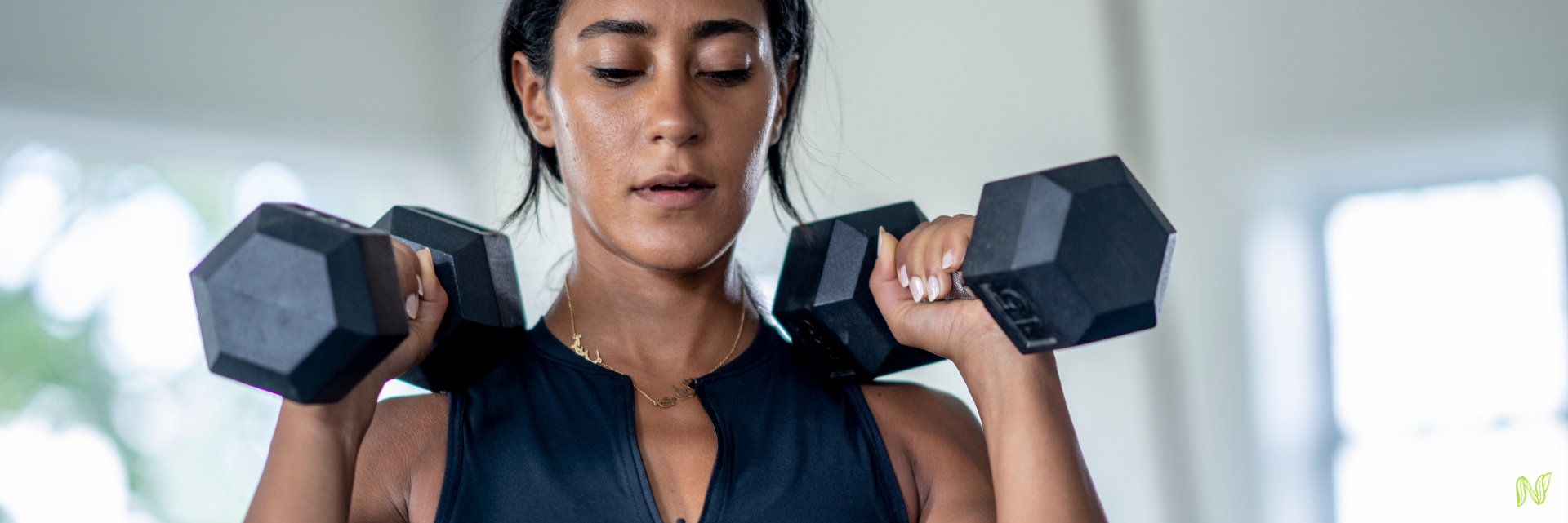
Resistance training, weight lifting, SIT and HIIT are rightly praised for improving bone density and muscle mass post-menopause. They also support metabolic, cognitive and sleep health.
And yet — many women 50+ are not in gyms. They don’t own equipment. Or they simply don’t resonate with that culture. I’m one of them. I will always choose the forest, yoga, swimming or rebounding over a weight room.
So the real question becomes: are there other viable, evidence-informed pathways?
Research suggests yoga can improve perceived sleep quality in peri- and post-menopausal women, reduce anxiety and depressive symptoms, and support cognitive resilience through autonomic regulation and improved vagal tone (Innes et al., 2012; Cramer et al., 2013; Gothe et al., 2019).
It does not replace estrogen, and it does not outperform progressive resistance training for maximal bone and muscle gain. But it meaningfully supports mood, stress regulation and overall quality of life.
The missing piece is mechanical load.
When I began adding 2–4 kg to poses such as plank (light load across the sacrum), locust (ankle weights) and chair pose (holding dumbbells), yoga shifted from mobility practice to strength stimulus. When load is progressive, repetitions are slow and controlled (8–10 deliberate reps), and static holds approach muscular fatigue (20–40 seconds), muscular adaptation follows.
Muscularly, this strengthens the glutes, spinal extensors, quadriceps and deep core. For bone, it introduces mechanical strain — a necessary stimulus for adaptation. Bone responds best to strain, rate of loading and progressive overload (Turner & Robling, 2003). Light weights create useful strain, though the stimulus remains modest compared to heavier compound lifts (Howe et al., 2011).
Introducing controlled stomping in chair pose — holding 4 kg while performing 8–10 deliberate heel drops — adds brief impact loading and faster ground reaction forces. This creates a low-level plyometric stimulus: controlled elasticity under load. It increases osteogenic potential while remaining accessible and joint-friendly when applied thoughtfully.
However, two caveats matter for post-menopausal women.
If osteopenia or osteoporosis is present, stomps should be controlled — not aggressive heel slamming. Pelvic floor integrity also matters. Excessive downward force without coordination may aggravate symptoms in women with prolapse or stress incontinence.
Technique refinement is essential:
- Soft but decisive heel drop
- Neutral spine
- Gentle exhale on impact (avoid breath-holding)
Will this replace heavy squats or deadlifts for maximal bone gain? No. Progressive resistance training remains superior for maximal osteogenic and hypertrophic stimulus. But for many women, this integration becomes a powerful bridge — respecting both biomechanics and nervous system regulation.
For me, the answer was never either/or. It was integration.
Midlife resilience is not built by intensity alone. It is built by intelligent loading, strategic impact and sustainable practice
Optimising the Osteogenic Response
To enhance results:
- Gradually increase load over time
- Include occasional impact (step-ups, controlled stomping, light hops if appropriate)
- Ensure adequate protein intake (~1.6 g/kg/day)
- Prioritise recovery and sleep
Despite not being my favourite activity, I’ve added deadlifts and some structured strength work to my routine. At 61, I recognise the need to adapt — to give my bones, muscles and overall health the stimulus they now require. Slowly — and to my own surprise — I’m making peace with it… and have even starting to enjoy it.
By Monika Ramasamy, 22th February 2026
References
Afonso, R. F., et al. (2012). Menopause, 19(2), 186–193.
Cramer, H., et al. (2013). Depression and Anxiety, 30(11), 1068–1083.
Gothe, N. P., et al. (2019). Brain Plasticity, 5(2), 1–15.
Innes, K. E., et al. (2012). Evidence-Based Complementary and Alternative Medicine, 2012, 294058.
Newton, K. M., et al. (2014). Menopause, 21(4), 339–346.
Uebelacker, L. A., et al. (2023). Journal of Clinical Psychiatry, 84(6).*